Credit Repair in Nebraska
Disputing inaccurate information on your credit report is a right guaranteed under federal law, and it costs nothing to exercise directly. No credit repair company can remove negative items that are accurate, current, and verifiable. That boundary holds regardless of who you hire or how much you pay. What a structured credit repair program adds is a methodical audit of every account being reported against you, a documented challenge process run across multiple rounds, and the organized follow-through that most people don’t have time to manage on their own.
White Jacobs & Associates runs its work under attorney supervision, with each client assigned a dedicated credit analyst who reads through the report with you, explains what the data shows, and stays in contact throughout the program. The actual round work (the submissions, the creditor challenges, the documentation) is handled by the Investigative Research team, which runs the process behind the scenes.

Nebraska’s average credit score lands just a point below the national figure, which sounds solid. The more interesting angle is that Nebraska remains one of the more affordable housing states in the country, and for buyers whose reports carry inaccurate or outdated negatives, that affordability window narrows fast.
What the numbers say about credit in Nebraska
According to Experian data, Nebraska’s average FICO Score came in at approximately 714 in 2024, essentially matching the national average of 715. That puts Nebraska consumers squarely in the middle of the national distribution, not among the struggling states in the South and not among the high-scoring Midwest and New England outliers either. The practical meaning is that a meaningful portion of Nebraska’s population sits right at the threshold where small score differences determine loan approval and interest rate tiers.
A score at or near 714 usually reflects a particular mix: payment history that’s mostly clean but carries one or two late marks, and revolving balances that sit in the moderate range rather than being paid off monthly. Both factors respond to the same kinds of corrections. Removing an inaccurately reported late or disputing an unverifiable collection can shift the underlying components that the score calculation weights most heavily.
Nebraska consumer debt
Nebraska consumers generally carry debt loads that track close to national benchmarks. Nationally, the average credit card balance reached approximately $6,730 in Q3 2024 per Experian, and the average auto loan balance was $24,297 over the same period. Auto financing is a consistent fixture on Nebraska credit files given the state’s geography, and monthly vehicle payments regularly factor into the debt-to-income calculations that lenders run during mortgage underwriting. When credit card utilization climbs alongside an existing auto loan, the combination tends to suppress scores below where the individual’s actual payment behavior would otherwise put them.
The more consequential issue for many Nebraska clients is that errors on a credit file compound this problem. A collection that doesn’t belong to you, a balance shown incorrectly, or a late payment marked against the wrong account all drag the number lower than the underlying behavior warrants.
The housing market raises the stakes on your score
Nebraska’s statewide median home price was approximately $300,800 as of early 2026, according to Redfin, meaningfully below the national median and among the more accessible markets in the country. Omaha’s median hovered around $306,000 in late 2025. For buyers who can qualify, these prices represent a genuine opportunity relative to most major metros.
The Nebraska Investment Finance Authority (NIFA) administers the state’s primary first-time homebuyer programs, including the Welcome Home and Homebuyer Assistance programs. NIFA’s minimum credit score requirement is 640 for conventional and government-backed loans, with a maximum debt-to-income ratio of 45%. Borrowers with scores of 660 or above qualify for slightly more flexibility on DTI. For someone sitting at a 615 or 625 because of an inaccurately reported collection, clearing that item can mean the difference between qualifying for a NIFA-backed loan and sitting on the sidelines while interest rates keep moving.
Common credit problems we see with Nebraska clients
The file types we review from Nebraska clients reflect what turns up across the broader Midwest: medical debt, older revolving accounts, and auto-related reporting issues.
Collections and charge-offs
Medical collections are among the most frequent items on Nebraska files, partly because medical billing errors are common and partly because hospital systems often send accounts to third-party collectors who report inconsistently across bureaus. Charge-offs on credit card accounts also appear regularly, sometimes listed with different balances or different status dates depending on which bureau you pull. Those inconsistencies create grounds for challenge.
Late payments
A single late payment on an auto loan or mortgage can pull a score in the mid-700s down by 50 points or more, with the suppression fading gradually over the seven-year reporting window. What matters most is whether the late is reported accurately at all three bureaus. If one bureau shows a 30-day late and another shows a 90-day late on the same account, that discrepancy is worth reviewing. For clients planning a home purchase, the timing of that correction against their target application date shapes how we prioritize the file.
Is credit repair legal in Nebraska?
Yes. Federal law guarantees every consumer the right to dispute inaccurate information on their credit report, and that right can be exercised at no cost directly with the three major bureaus. What credit repair companies do legally is assist that process under a formal contract, within a defined federal framework.
The laws governing this space include:
- FCRA (Fair Credit Reporting Act): Defines what information can be reported, how long it can stay on a report, and consumers’ rights to dispute inaccurate or unverifiable items.
- FCBA (Fair Credit Billing Act): Establishes a direct dispute process with creditors for billing errors on open credit accounts.
- FDCPA (Fair Debt Collection Practices Act): Sets limits on what third-party collectors can say and do when pursuing a debt.
- CROA (Credit Repair Organizations Act): Regulates credit repair firms specifically, prohibiting advance fees and requiring written contracts with cancellation rights.
- FACTA (Fair and Accurate Credit Transactions Act): Gives consumers the right to a free annual credit report and additional protections against identity theft.
Firms operating within these rules work only on what can actually be challenged: items that are inaccurate, unverifiable, or outdated. Accurate, current, verifiable negatives fall outside what anyone can legitimately dispute. When we audit a file, we’re identifying which accounts hold up under scrutiny and which don’t, then building a documented record that supports the challenges worth making.
If you’d rather handle disputes on your own, the FTC’s credit repair FAQ explains the bureau process in plain terms. The bureau dispute process is free, and some people work it effectively without help. Others find that running it across three bureaus, over multiple rounds, while tracking creditor responses is more time-consuming than they expected.
Nebraska credit and debt laws worth knowing
This section covers general education, not legal advice. Anyone currently facing a debt lawsuit, an active judgment, or a garnishment order should speak with a licensed Nebraska attorney before responding or making any payments.
Written contracts
Under Neb. Rev. Stat. § 25-205, creditors have 5 years from the date of last payment or account activity to file a lawsuit to collect on a written contract. This window applies to credit cards, personal loans, auto financing agreements, and similar written obligations. Nebraska’s treatment of credit cards as written contracts is consistent and relatively well-settled, which makes the 5-year window more predictable here than in some states where the classification is contested.
Open accounts
Oral contracts and obligations not founded on a written instrument carry a shorter window of 4 years under Neb. Rev. Stat. § 25-206. Because standard credit card agreements are treated as written contracts in Nebraska, the 4-year window applies primarily to informal verbal arrangements rather than typical consumer debt. The Nebraska Attorney General’s Consumer Protection Division handles complaints related to debt collection practices and can be a useful starting point if a collector’s conduct seems out of bounds.
Wage garnishment
Nebraska sets the standard garnishment cap at 25% of disposable weekly earnings for most consumer debts, consistent with the federal Consumer Credit Protection Act. However, Neb. Rev. Stat. § 25-1558 provides a meaningful reduction for borrowers who qualify as the head of a family: the cap drops to 15% of disposable weekly earnings in those cases. To qualify, you must actually be supporting one or more dependents connected to you by blood, marriage, adoption, or guardianship. Simply being married without dependents does not automatically trigger the exemption. This protection applies to child support, but separate and higher garnishment limits govern those obligations.
Educational information only. This is not legal advice. If you are currently being sued for a debt, have received a judgment, or are subject to an active garnishment, consult a licensed attorney in Nebraska before taking any action. Also worth noting: any payment on a time-barred debt, even a partial one, can restart the statute of limitations clock and give the creditor renewed legal standing to pursue the full balance.
How White Jacobs works your file
Your credit analyst is your primary contact from the start. They go through your reports with you, flag which accounts warrant a closer look, and explain what the data actually means for your situation. Updates and questions run through them. Their role is interpretation and communication, not execution.
The Investigative Research team runs the round-by-round work: the submissions to creditors and bureaus, the documentation of challenges, and the tracking of what comes back. They’re the group that knows the procedural details and handles the mechanics of each round.
The program spans multiple rounds over a period of months and is built around your specific report rather than a standardized playbook. Attorney supervision runs through the entire engagement. More detail on how the rounds work is on the process page, and the one-on-one analyst page covers what that relationship looks like day-to-day.

Questions Nebraska residents ask us
How long does credit repair take in Nebraska?
Most clients complete the program in six months or less, though the actual timeline depends on the number of accounts in dispute and how quickly creditors and bureaus respond through each round. Initial movement typically shows up within the first 45 to 60 days as the first round of responses arrives.
Can you remove accurate negative items from my report?
No. As the CFPB confirms, accurate and verifiable negative information cannot be removed by anyone before its reporting period runs out. The results in credit repair come from identifying items that are inaccurate, unverifiable, or outdated, not from challenging things that hold up under scrutiny.
What credit score do I need to buy a home in Nebraska?
For NIFA programs through the Nebraska Investment Finance Authority, the minimum is 640 with a 45% DTI cap, or 660 for more DTI flexibility. Most conventional lenders want at least a 620 to 640. FHA loans can sometimes go lower depending on down payment size and lender requirements. Given Nebraska’s relatively accessible price points, crossing from a 615 to a 640 on a cleaned-up file can open up the full NIFA program stack, including down payment assistance.
Is my old debt past Nebraska’s statute of limitations?
For written contracts, including most credit card accounts, the limit is 5 years from your last payment under Neb. Rev. Stat. § 25-205. Oral or unwritten obligations run 4 years under § 25-206. Once the window closes, a collector cannot successfully sue you for the debt in Nebraska court, but making any payment, even a token one, can reset that clock. If you’re fielding calls about an old account and aren’t sure where you stand, talk to a licensed Nebraska attorney before responding.
Do I have to hire anyone to fix my credit?
No. Disputing items directly with the bureaus is free and available to everyone. A credit repair firm adds structure, round-by-round execution, and the time investment of tracking everything across three bureaus. Some people manage the process on their own effectively; others find the workload and follow-through harder to maintain than they expected.
What does it cost?
White Jacobs prices by file, not by month, and the program is built to reach a conclusion rather than renew indefinitely. Specifics come out of the free consultation, where you’ll have a clear picture before committing to anything. Schedule a call here.
Who Nebraska credit repair is for, and who it isn’t
This program produces results for some people and is the wrong call for others. Here’s how to think about whether it fits your situation.
It’s likely a good fit if you:
- – Have accounts reporting with errors, unverifiable data, or inconsistencies across bureaus
- – Are trying to reach NIFA’s 640 minimum or improve your DTI position for a Nebraska home purchase
- – Have older collections or charge-offs that may not be verifiable or are approaching the end of their reporting window
- – Are planning a significant credit application in the next 6 to 12 months and need organized, multi-round work on your file
- – Want a team tracking the process across bureaus rather than managing it yourself
It’s probably not the right fit if you:
- – Have only recent, accurate negatives you’re hoping to clear early (no firm can do that)
- – Are currently in active bankruptcy proceedings
- – Need results within the next two or three weeks for an upcoming application deadline
- – Are looking for a one-time intervention rather than a structured, multi-round program
When a file comes to us and the honest assessment is that there’s nothing there to meaningfully challenge, we say so rather than enroll someone in a program that won’t move the needle.
The team behind this page
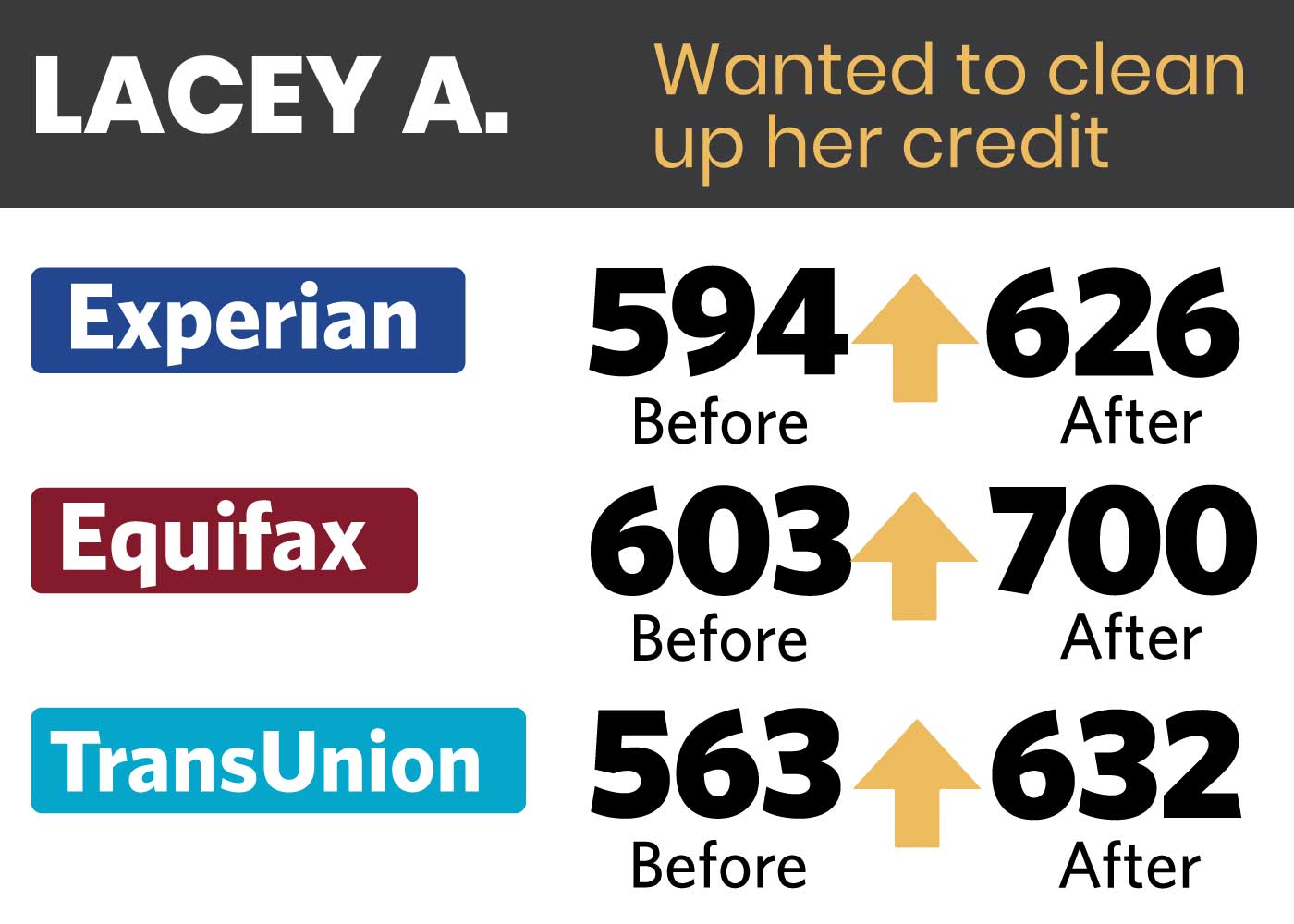
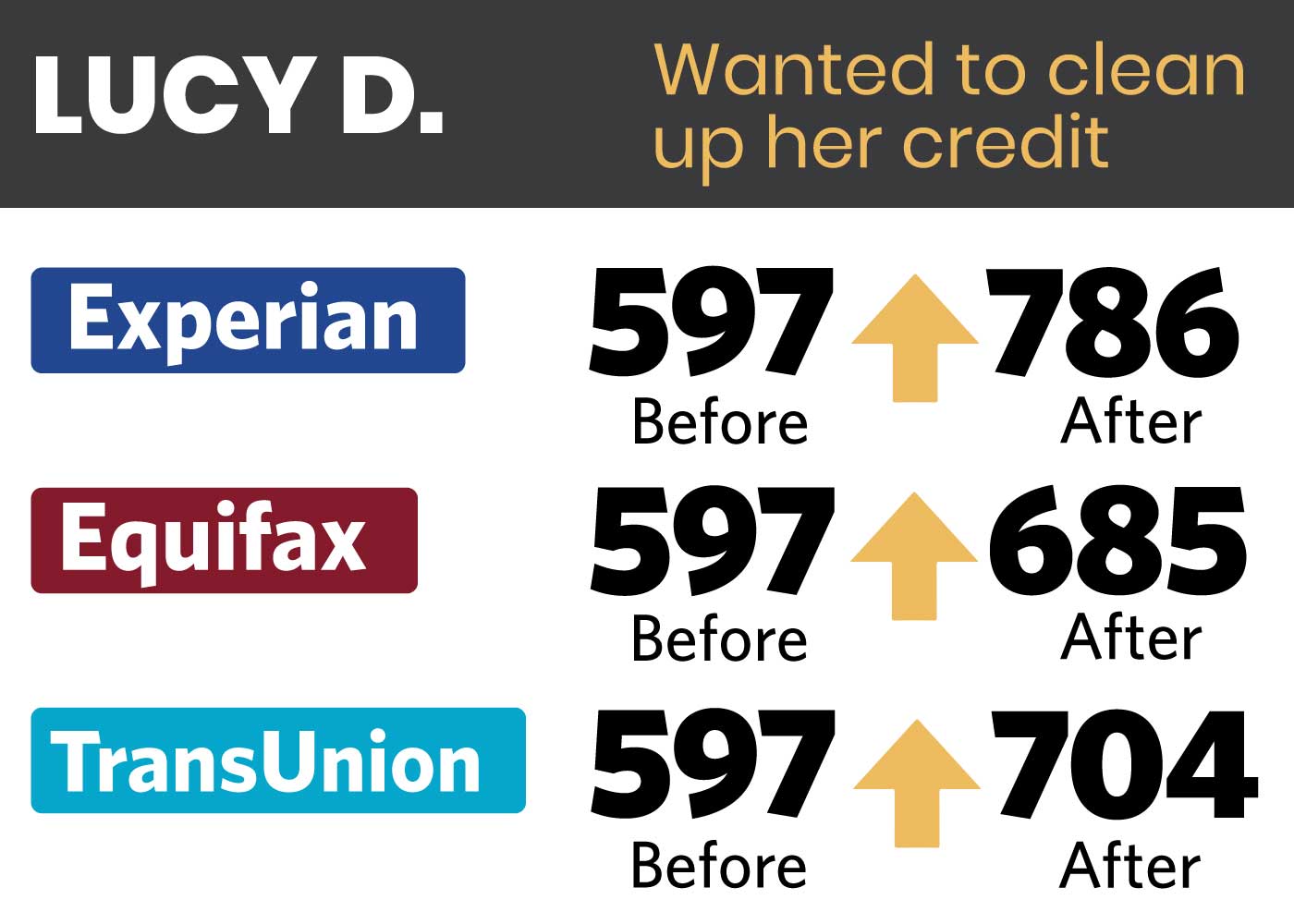
White Jacobs operates under attorney supervision, with a dedicated Investigative Research team running each file and credit analysts managing every client relationship directly. You can read about client outcomes on our results page.
Nebraska consumers with questions about their rights around debt collection or credit reporting can reach the Nebraska Attorney General’s Consumer Protection Division at ago.nebraska.gov or by calling (402) 471-2683.
Book a Free Consultation
The consultation is where you find out whether your file is worth working and what movement is realistic for your situation. We look at the reports and give you a straight answer. We’re easy to talk to. Book your free consultation here.
Important disclosures
White Jacobs & Associates is a credit repair organization as defined under the Credit Repair Organizations Act (CROA), 15 U.S.C. § 1679 et seq. You have the right to dispute inaccurate information in your credit report directly with the credit reporting agencies at no cost.
We do not remove accurate, current, and verifiable information from credit reports. All services are provided under a written contract, and you have the right to cancel that contract within three business days of signing, without penalty or obligation. White Jacobs does not provide legal advice. Credit outcomes vary, and no specific credit score increase or result of any kind is guaranteed.
White Jacobs and Associates provides credit-related assistance services designed to help consumers review credit reports and prepare disputes when appropriate. Consumers may dispute credit report information directly with credit bureaus at no cost. We are a remote service delivered from Plano, TX for eligible residents of most states nationwide in the US.