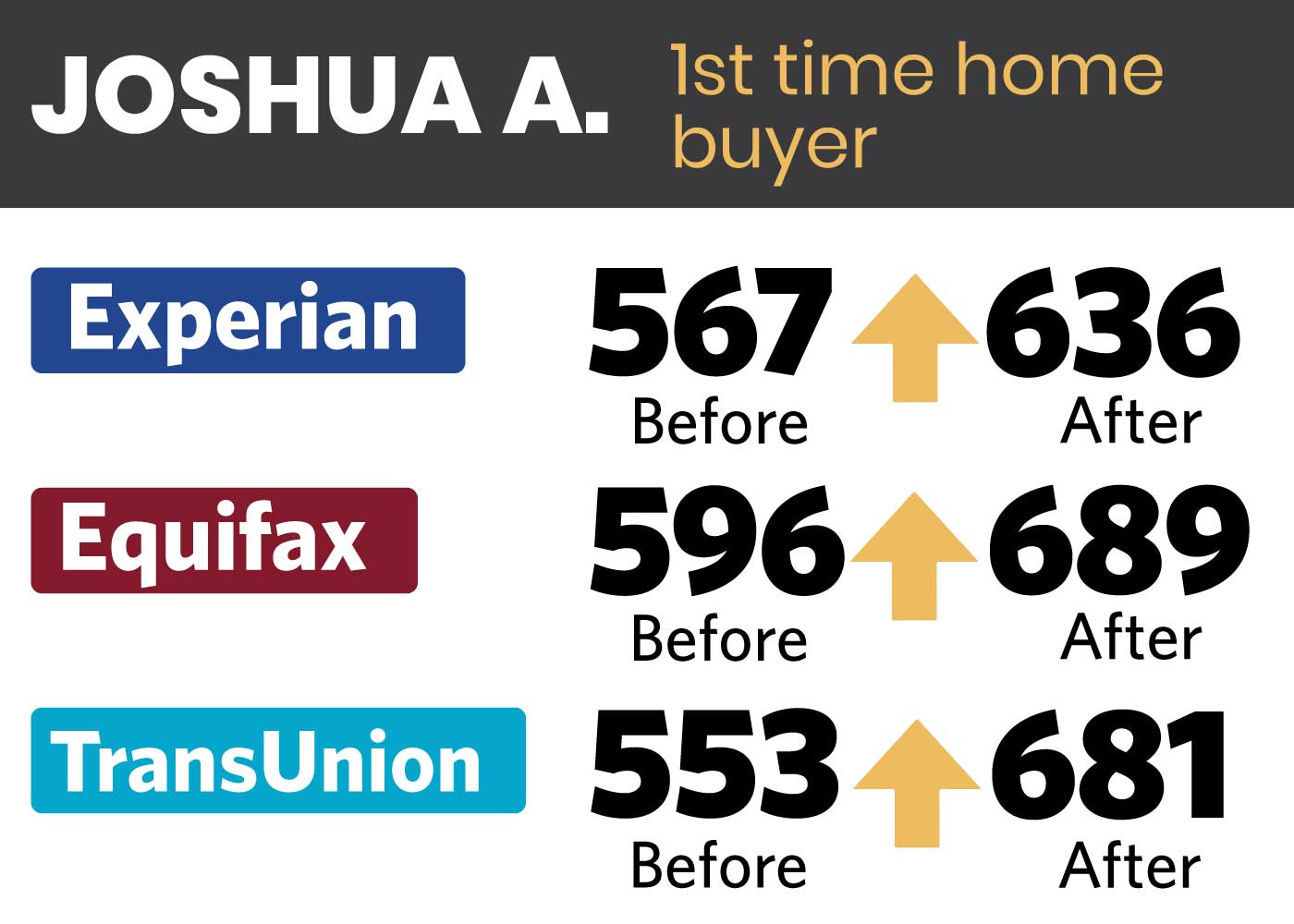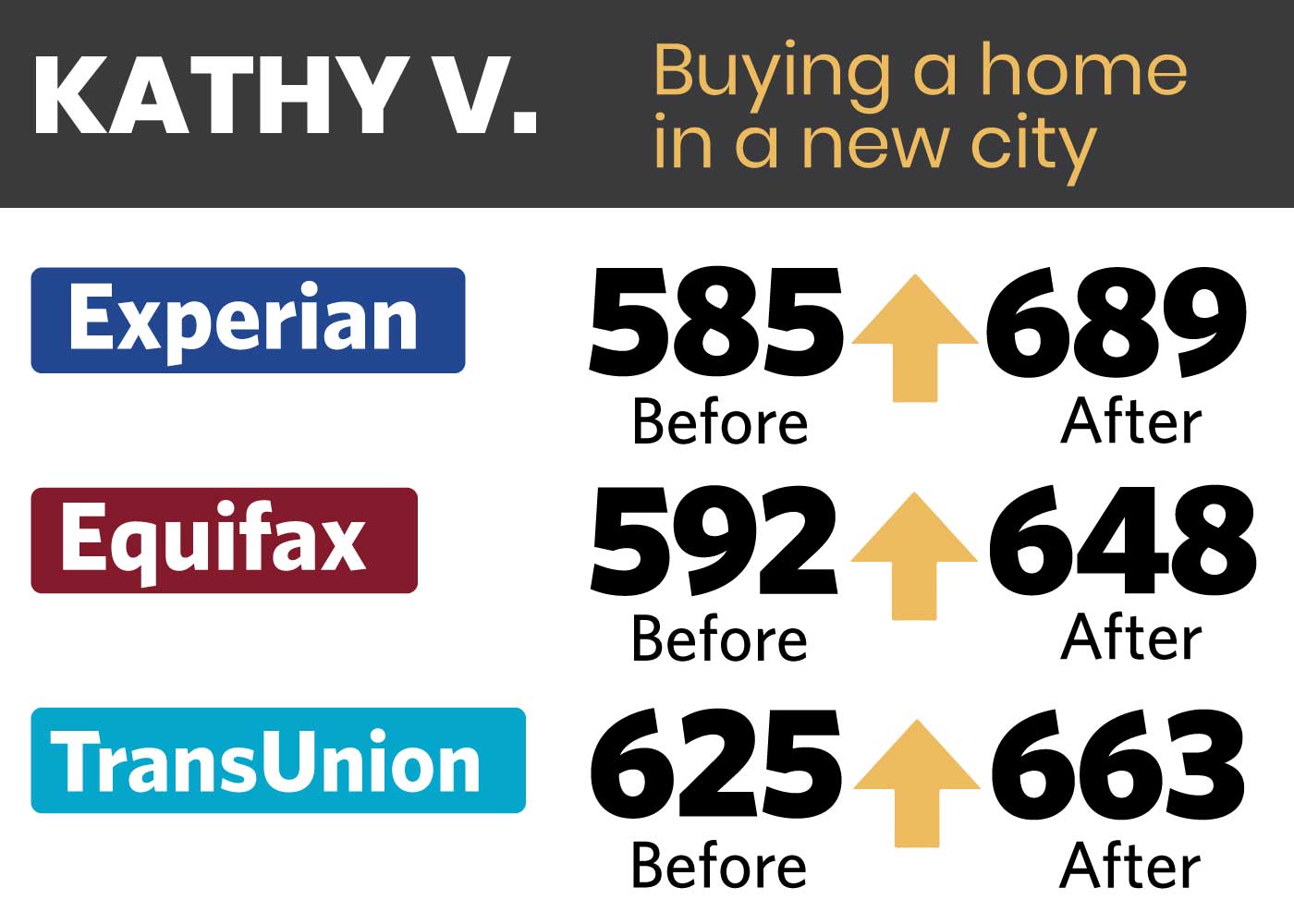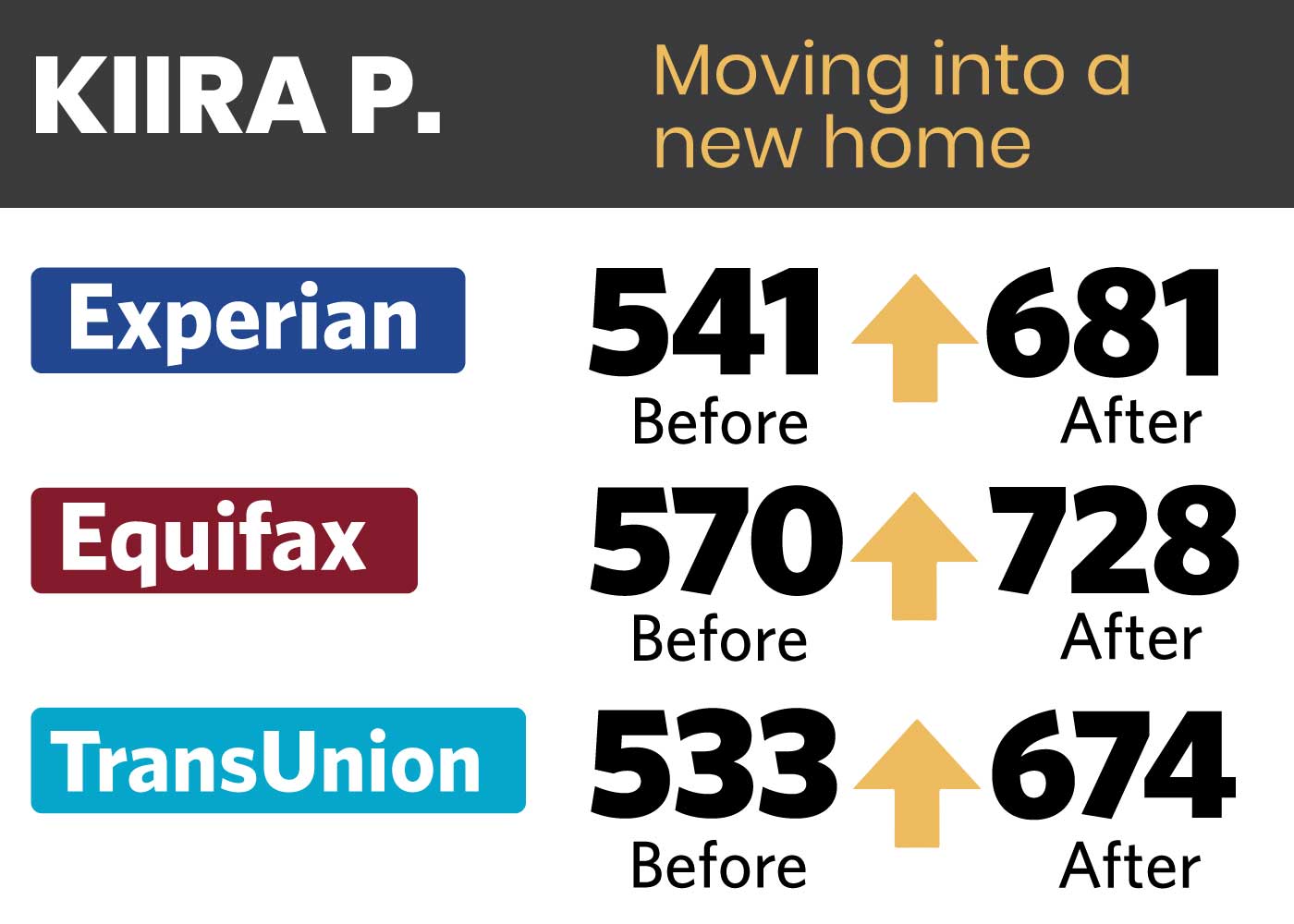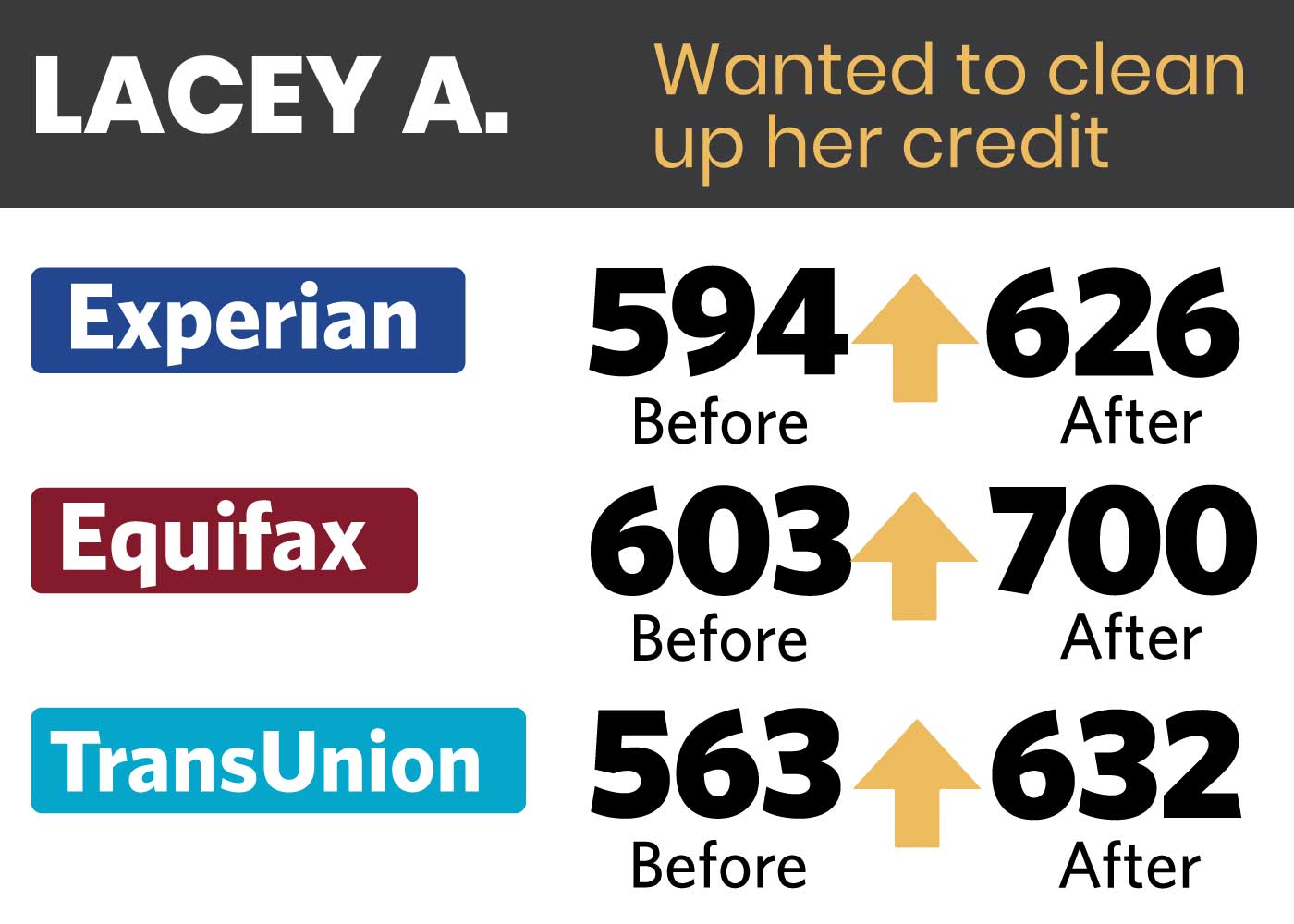
With thousands of happy clients on Google, Facebook, TrustPilot, and more, you will not find a stronger reputation. See how we are different!
We don't just send out dispute letters like other companies. We customize our approach with personalized audits for maximum results.
You'll work with the same credit expert for the duration of the program. They will update you, coach you, and answer your questions.
Our attorney-managed, 4-round process is personalized for each client by an Investigative Research team, all at a reasonable cost.
Schedule your Free Consultation & Analysis
We protect your privacy. Your information is not shared with third parties.
By submitting this form, you agree to receive texts from White Jacobs and Associates. Ongoing communication before, during, and after the program will be initiated by our credit analysts and their assistants. Msg & data rates may apply. Msg frequency varies. Unsubscribe at any time by replying STOP or clicking the unsubscribe link (where available). Privacy Policy

How We're Different
See what our customers are sayingWe can help with...
In the last few years, the economic situation of Grapevine, TX had been steadily improving. People are buying homes and making other big financial moves. In 2024, the average Texas adult, including Grapevine citizens, with a credit score carried approximately $57,900 in total debt—encompassing mortgages, student loans, credit cards, and auto loans per USAFacts.org. Unfortunately, a large part of the economy is uncertain and personal events can sometimes cause unexpected financial struggles. It happens to all of us. You need to get your financial situation in order as quickly as you can. The best and fastest Grapevine credit repair is done by White, Jacobs and Associates.
The longer you wait for credit repair services, the bigger the negative impact will be on your finances. We heard it through the grapevine, as you have probably, that the next few years may be tough. But, you may have had some tough years in the past. You no longer have time to use less-effective traditional credit repair services. They take too long and are largely a waste of time. We offer you an aggressive alternative.

While traditional credit repair tactics have their place, they are only a fragment of what we do. We intend to improve your score as quickly as possible. If our whole purpose was to send generic dispute letters and hope for the best, as the other companies do, we would tell you to do it yourself and save some money.
WJA offers aggressive credit repair services, backed by a unique 4-round process and credit improvement expertise. Our methods, combined with our Investigative Research (IR) Team, are what makes us the credit repair Grapevine deserves. Just ask any of the thousands of clients we’ve served. Our reputation speaks for itself.
April-August 2025
Senior Credit Analyst (6+ years experience)
“Lavon came to WJA with a combination of collections and slow pays that had been holding his credit profile back for far too long. We reviewed each account for factual, procedural, and legal accuracy under FCRA to establish a solid foundation for removal. We also kept a continuous watch on his reports, noting every status change and update until deletions were confirmed across all three bureaus. After several months in the program, every targeted account had been successfully cleared. He was able to secure a better mortgage rate and put his homebuying plans back in motion.”
– 11 Collections Deleted
– 13 Slow Pays Deleted
With 24 negative entries removed, Lavon’s credit profile looked like an entirely different picture to lenders. That shift gave him access to a more favorable mortgage rate — one that made the numbers work and put homeownership well within reach.
Disclaimer: Results vary based on each client’s credit profile and the accuracy of the information reported. Every case is investigated individually for potential compliance issues.
March-August 2025
Senior Credit Analyst (8+ years experience)
“Melissa arrived at WJA with collections, charge-offs, and slow pays spread across her credit history — a combination that had stalled her mortgage plans entirely. We identified which accounts were best approached through direct dispute versus alternative resolution strategies, and built our approach accordingly. We also helped Melissa understand how to protect and sustain her results well beyond the deletion phase. Over the course of several months, every account we targeted was eliminated. Her lender approved her mortgage application and she was able to move forward.”
– 6 Collections Deleted
– 27 Charge-Offs Removed
– 9 Slow Pays Deleted
Clearing 42 negative accounts from Melissa’s report brought about a dramatic shift in her overall credit standing. That level of improvement gave her lender a compelling reason to say yes — and her mortgage approval marked a turning point she had been working hard to reach.
Disclaimer: Results vary based on each client’s credit profile and the accuracy of the information reported. Every case is investigated individually for potential compliance issues.
February-July 2025
Senior Credit Analyst (9+ years experience)
“Willie came to our team with a staggering number of negative accounts — collections, charge-offs, and slow pays all stacked against him at once. We prioritized high-impact items from the start to generate meaningful score movement as early in the process as possible. Our Investigative Research team also uncovered inconsistencies between Equifax, Experian, and TransUnion that strengthened our position on several accounts. With a methodical approach and consistent follow-through, every targeted account was eventually removed. Willie received a mortgage rate that reflected just how far his profile had come.”
– 47 Collections Deleted
– 4 Charge-Offs Removed
– 4 Slow Pays Deleted
Removing 55 negative accounts from a single credit profile is a remarkable achievement — and the results spoke for themselves. Willie’s transformed credit standing opened the door to a mortgage rate that once would have been out of the question, giving him a real and lasting foundation to build on.
Disclaimer: Results vary based on each client’s credit profile and the accuracy of the information reported. Every case is investigated individually for potential compliance issues.
Your credit score impacts every facet of your life. Most people know that it affects their ability to get a loan, which is true. However, it also determines the interest rates you get on loans and your ability to rent a home – yes, landlords can access your credit report. Even your potential employers may ask to see your credit file, although you need to give them permission to do so.
As you can tell, your financial life can be severely impacted by a poor credit score. Imagine you can get a loan, but instead of a 6% interest rate on a long-term loan, you are forced to get a 7% one. Over the long run, that’s tens of thousands of dollars. Even a few points higher on your credit score can make the difference between being approved with a decent rate instead of being denied or getting a poor rate.
Your credit report shows positive and negative entries. Responsible management of revolving credit (your credit cards and credit lines), paying off your bills on time, the length of your credit history, etc. all impact your credit positively.
Bad entries can be anything from late payments, collections, charge-offs, student loan late payments, repossessions, bankruptcies, the way you use your credit cards – anything that potential lenders perceive as a risk factor that you won’t repay your loans. In August 2023, 11% of consumers in Tarrant county, including Grapevine citizens, had medical debt in collections per Urban Institute data. It’s highly likely that a population in Grapevine would benefit greatly from our services.
At WJA we have seen everything that can negatively impact your credit scores and know how to deal with it. You must understand that lenders don’t want you to have a very good score. They want you to repay them, but repay them with as much interest as they can get. That is why experienced credit repair requires an aggressive approach.
We take a two-pronged approach – removing bad entries and adding positive ones. Once you hire us, we will assign you a personal credit analyst. They will investigate your credit report and come up with a custom game plan to improve your score. We decide which tactics will have the most impact on your credit score and what negative items we will go for first. In the meantime, you will receive counseling on how to add positive credit. Outside of counseling, our process has 4 stages.
In the first stage, we start disputing any negative entries. This takes a few weeks and this phase is mostly geared to see what kind of responses we get from the bureaus and creditors. During this stage in the process, we ask that you send over any postal mail that is sent to you. Your creditors will start contacting you and you should forward anything they have to say to us. We will analyze their responses, notate which items were removed, and initiate the second round.
In the second round, we start specific disputes and audits. Federal and state laws require your creditors and collection agencies to show proof that they have the right to report the items to the credit bureaus. We will press them to show us their proof. Often, they can’t and thus are obligated to remove them. That is the power of audits over disputes.
Stubborn creditors may still refuse to delete negative entries from your report, so in the third round we continue to increase the pressure utilizing our Investigative Research team. Dispute letters have their purpose, but they are only the beginning with us. Other credit repair companies stop there and don’t get results. Our IR Team will audit your creditors and credit bureaus, and use all applicable laws to protect your rights.
In the fourth round, we go after any negative entries that remain. The software system the creditors and bureaus use is far from perfect, and often causes miscommunication. We will force them to verify all the information they have on you. By the end of your process, you should see your score improve based on the expectations we set in our initial consultation (which is free).

Each person’s credit report is unique, so we need to analyze it before we give you an exact time frame. Many of our clients see their credit scores improve within the first 45 to 60 days of starting the program. The maximum length of our credit repair services is 6 months. If we can’t improve your score, we won’t string you along and have you pay us monthly fees to do nothing. We’ll let you know upfront if you’re a good candidate.
The answer is a resounding yes. We are an experienced credit repair company and our legal staff would never do anything to put you in jeopardy. The Fair Credit Reporting Act (FCRA), Fair Debt Collection Practices Act (FDCPA), Fair Credit Billing Act (FCBA), Fair and Accurate Credit Transactions Act (FACTA), and HIPPA laws regulate everything regarding credit scores, and our investigative research team members know the ins-and-outs of the laws.
We tell you how it is. WJA won’t sugar-coat the situation – if you are not a good fit, we will advise on what your other options are. Our mission is to get your buying power back and we will be as aggressive as is needed to do it. You should demand to know what Grapevine credit repair does for you and WJA will keep you informed at every step of the process. Don’t allow the other guys to string you along with niceties and platitudes – insist on results now.
White, Jacobs & Associates operates as a licensed and bonded credit services company that maintains complete adherence to the Credit Repair Organizations Act (CROA), Fair Credit Reporting Act (FCRA), Fair Debt Collection Practices Act (FDCPA), and all applicable licensing standards. Our procedures align with best practices established by the Consumer Financial Protection Bureau (CFPB) and Federal Trade Commission (FTC), with our methodology structured to safeguard your statutory rights throughout each phase. We secure clients’ confidential information using rigorous protocols that meet Gramm-Leach-Bliley Act (GLBA) requirements, while incorporating legal supervision to ensure all activities remain ethical and compliant.
Grapevine sits directly adjacent to DFW International Airport, and thousands of residents work for American Airlines, Envoy Air, TSA, or airport ground-services contractors. Airline and airport employment is inherently cyclical — furloughs, seasonal reductions, and contract rebids are a normal part of the industry, not a surprise.
The credit-protection playbook is straightforward: build your emergency fund during full-schedule months so that a furlough doesn't force you onto credit cards. The moment you're notified of a furlough or contract change, apply for Texas Workforce Commission unemployment benefits — Texas doesn't tax unemployment income, and filing quickly preserves your cash flow. If you have credit-card balances, call each issuer and ask about a hardship program before you miss a payment. Most major issuers will temporarily reduce your minimum payment or interest rate if you're proactive.
The worst thing you can do during a furlough is open new credit cards to cover expenses. Each application adds a hard inquiry and a new account that lowers your average age of credit. Instead, use existing cards, keep utilization below 30% on each, and prioritize your mortgage and auto payments — those two account types carry the most weight in your score.
Grapevine's historic charm is part of its appeal, but a significant portion of the city's housing was built in the 1970s and 1980s. Older homes can create financing complications that don't apply to new construction in Southlake or Trophy Club next door.
The main issue is appraisal and inspection. VA and FHA loans have stricter property-condition requirements than conventional financing — things like original HVAC systems, galvanized plumbing, and aluminum wiring can trigger repair requirements before the lender will fund the loan. If the seller won't make repairs, you're stuck renegotiating or switching to a conventional loan with a higher credit-score threshold.
The other financing angle is HELOC and renovation lending. Many Grapevine buyers purchase a 1980s home at $450,000–$500,000 and plan $80,000–$150,000 in renovations. A renovation loan (FHA 203(k) or Fannie Mae HomeStyle) rolls the purchase and rehab costs into a single mortgage. These require a minimum score of 620 for FHA or 680 for HomeStyle, plus contractor bids and a HUD consultant review for FHA. If you're planning this route, get your credit in position well before you start shopping — renovation loan approvals take 45–60 days, twice the timeline of a standard purchase.
Grapevine benefits from substantial hotel-occupancy and sales-tax revenue generated by the Gaylord Texan, Great Wolf Lodge, Grapevine Mills, and Bass Pro Shops, which keeps the city's portion of the property tax rate lower than many Tarrant County neighbors. But you still pay Tarrant County taxes and Grapevine-Colleyville ISD taxes, bringing the combined effective rate to approximately 2.10–2.24%.
On a $530,000 home — close to the city's typical value — that means roughly $11,000–$12,000 per year in property taxes, or about $920–$1,000/month added to your mortgage escrow. Combined with principal, interest, and insurance, a total monthly payment of $3,800–$4,200 is common at current rates. That requires a household income north of $110,000 to keep your DTI under 43%.
The credit risk is the same as in any high-tax Texas city: escrow shortfalls from annual reappraisals. When Tarrant Appraisal District raises your assessed value, your escrow payment increases mid-year. Budget for a 5–10% annual increase in your escrow as a baseline, and make sure your emergency fund can absorb the adjustment without forcing you into late payments on other obligations.
Grapevine is home to GameStop's national headquarters, Kubota Tractor's North American HQ, and several mid-sized corporate offices that have undergone workforce changes in recent years. If you're facing a layoff or voluntary separation, the first 30 days are the most important for your credit.
Do not miss a single payment in the first month. Late payments reported during a layoff period stay on your credit for seven years regardless of whether you found a new job the following week. If severance is offered, treat it as a bridge fund for minimum payments, not a spending cushion. Prioritize mortgage and auto payments first — those carry the heaviest scoring weight. Credit cards come next; call each issuer and request a hardship rate reduction or minimum-payment deferral before you're late.
If you have stock options or RSUs vesting during the layoff window, understand that exercising options or selling RSUs can trigger a taxable event that reduces your actual cash received. A surprise tax bill that goes to collections creates a second credit problem on top of the layoff. Consult a tax professional before making decisions about equity compensation, and file for Texas unemployment benefits the same week you're notified — Texas doesn't tax unemployment, and the benefit offsets minimum payments on revolving debt.
Schedule your Free Consultation & Analysis