Credit Repair in Augusta, GA: Scores, Your Rights, and Local Help

Updated August 2026

Augusta sits on the Savannah River at the Georgia-South Carolina line, the state’s second-largest city and the anchor of a metro built on the military, medicine, and cyber. Fort Eisenhower and the Army’s cyber operations, the AU Medical District, and the Savannah River Site give the area a steady, mission-driven employment base.

That economy, paired with some of the lowest home prices of any Georgia city, makes Augusta a place where a first mortgage is genuinely within reach, provided your credit is ready. For a lot of local buyers, credit is the one thing standing between them and the closing table.

This page covers what Augusta’s numbers mean for your credit, what your rights are, and where to find free help. White Jacobs is attorney-managed and runs a four-round audit process, but everything below is yours to do on your own.

credit repair Augusta GA

One of the Most Affordable Markets in Georgia

Zillow has placed Augusta’s median home value well below $200,000, among the lowest of any city its size in Georgia. Affordability like that opens the door to first-time buyers, military families, and healthcare workers who might be priced out of a larger metro.

Low prices, though, do not mean easy financing. The barrier for most Augusta buyers is not the price of the house; it is qualifying for the loan, and that turns on your credit score. Clearing an inaccurate item that is dragging your score is often what separates an approval from a denial.

Why FHA and VA loans matter here

Augusta purchases lean heavily on two loan types. FHA loans, built for first-time and moderate-income buyers, open up around a 580 score for the lowest down payment, with conventional financing generally wanting about 620. And because of the large military community around Fort Eisenhower, VA loans are common; they set no strict federal score minimum, though most lenders look for roughly 620 in practice. On an affordable Augusta home, clearing whichever threshold applies to you is usually the whole challenge.

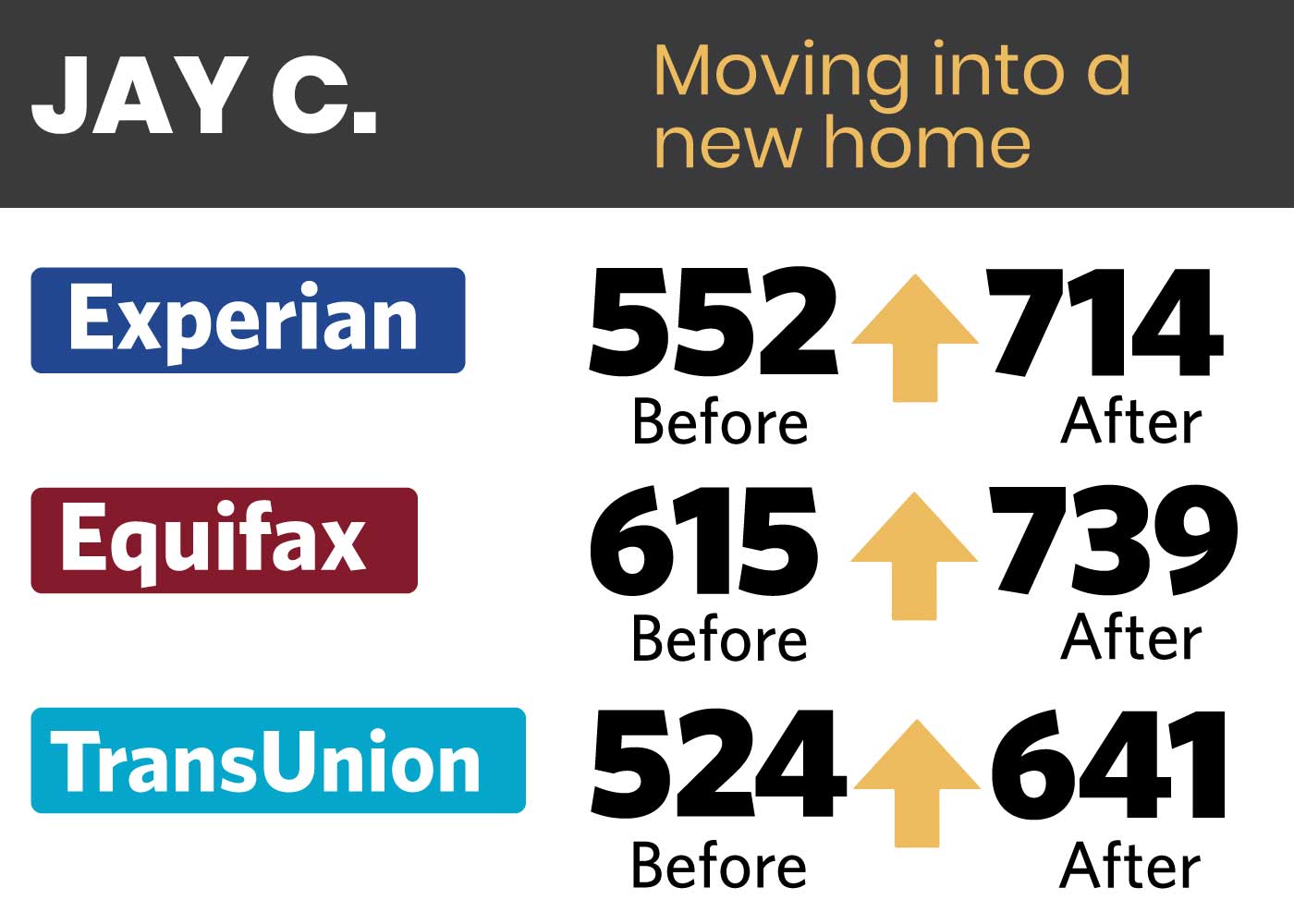
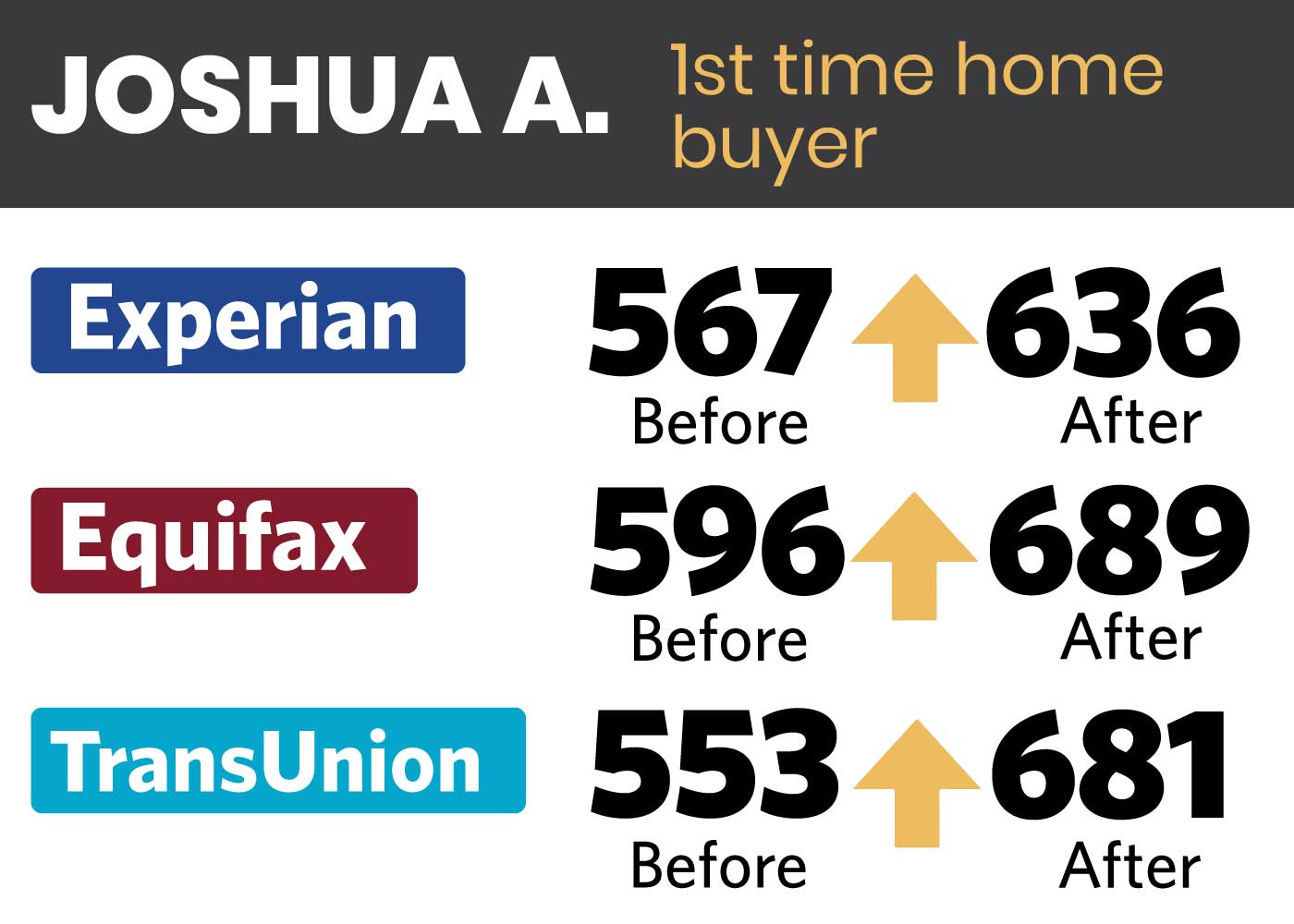
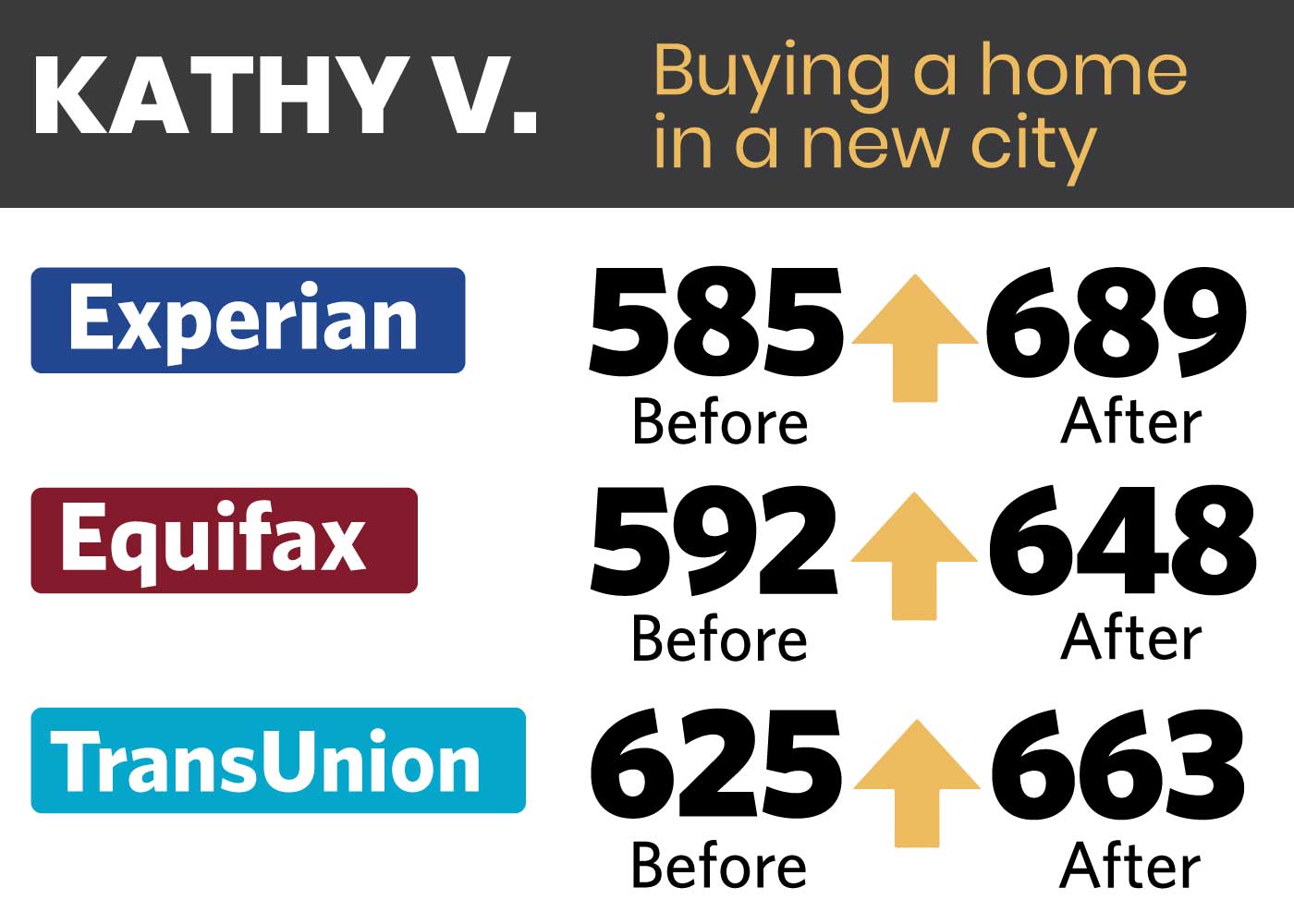
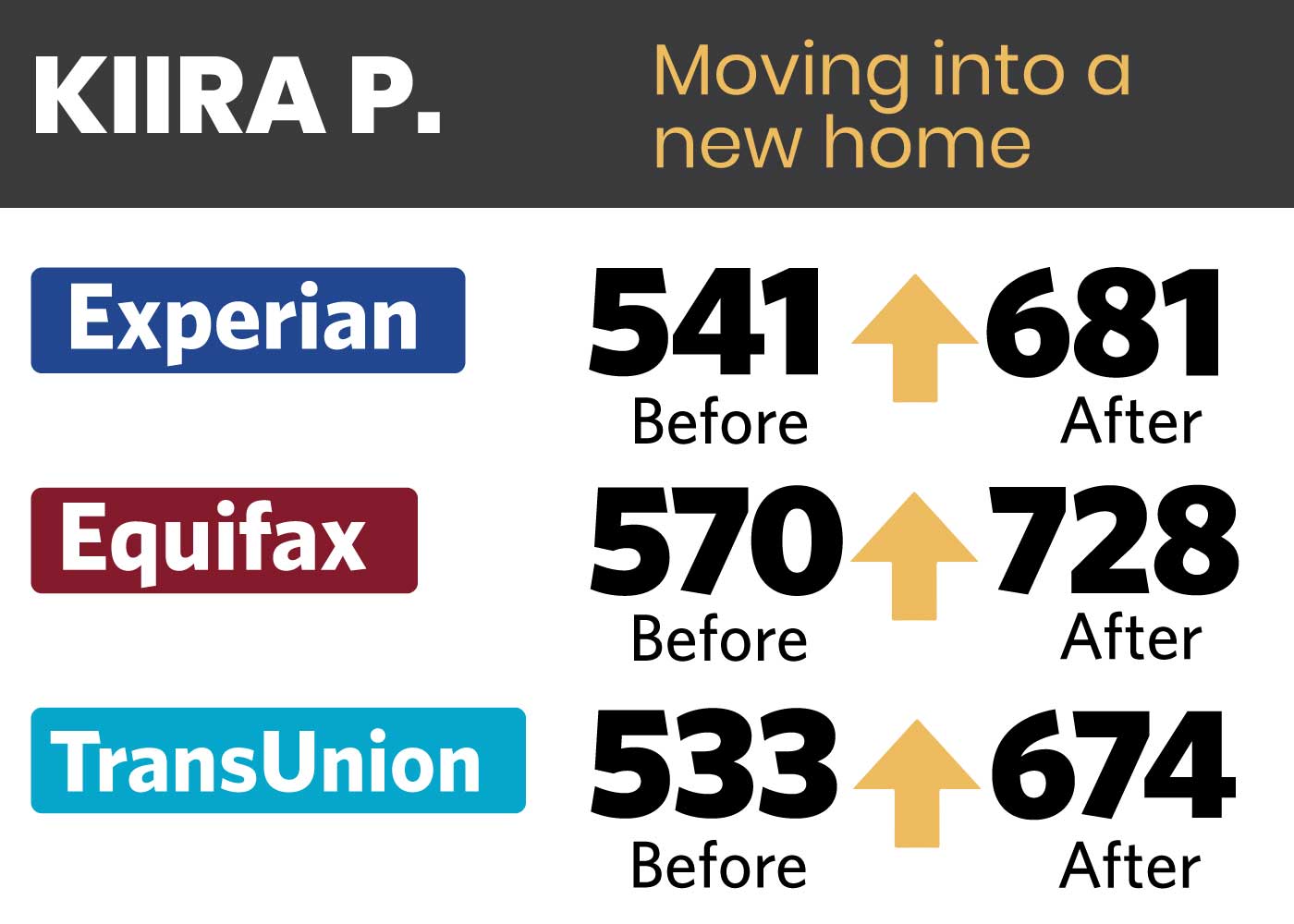
Transparent Credit Improvements Achieved by Our Team

These are real results from Augusta-area clients. Outcomes vary from person to person based on what each credit profile contains and whether the negative information is accurate, and every case is investigated individually.

Case Study: Larry C. (from Augusta, GA)

Timeframe: January to March 2025
Reviewed by: Senior Credit Analyst (7+ years experience)

Larry came to us with several collections and late payments weighing on his credit. We started with the items carrying the most weight to create early movement, and we walked him through how to hold those gains once the deletions were finalized. Over three months, the accounts we challenged came off his report, and Larry was able to lock in a better mortgage rate on his home purchase.

Verified results: 6 collections deleted totaling $1,470, and 4 slow pays deleted.

Disclaimer: Results vary based on each client’s credit profile and the accuracy of the information reported. Every case is investigated individually for potential compliance issues.

Case Study: Stephon F. (from Augusta, GA)

Timeframe: April to August 2025
Reviewed by: Senior Credit Analyst (5+ years experience)

Stephon arrived with a number of collections and late-payment entries hurting his standing. We audited each creditor furnishing those accounts and kept a close watch on his files for updates and removals. After five months in the program, the negative entries we challenged were resolved, and Stephon’s mortgage application received final approval.

Verified results: 11 collections deleted, and 3 slow pays deleted.

Disclaimer: Results vary based on each client’s credit profile and the accuracy of the information reported. Every case is investigated individually for potential compliance issues.

Case Study: Ty Y. (from Augusta, GA)

Timeframe: June to August 2025
Reviewed by: Senior Credit Analyst (4+ years experience)

Ty came to our team with collections and late payments bringing down her score. We examined each account for factual, procedural, and legal compliance under the FCRA, then decided which warranted direct disputes and which were better addressed another way. Within three months, the questionable items were removed, and her mortgage application was approved shortly after.

Verified results: 4 collections deleted totaling $1,334, and 2 slow pays deleted.

Disclaimer: Results vary based on each client’s credit profile and the accuracy of the information reported. Every case is investigated individually for potential compliance issues.

Richmond County and the Local Credit Picture

Augusta anchors Richmond County, and like a lot of affordable, working communities it carries a meaningful share of below-660 credit files. Medical collections are a common thread, given the size of the local healthcare sector, and those are worth a close look, because billing and reporting errors on medical debt are frequent.

A below-660 score in Augusta is common rather than unusual, and it often traces to a report carrying items that are inaccurate, outdated, or unverifiable. For a buyer trying to qualify, clearing those is frequently what makes the difference.

If You Are Sued Over a Debt in Augusta

Georgia handles this differently from some states, so it is worth knowing. Unlike states that shield wages entirely, Georgia does allow wage garnishment once a creditor wins a judgment on consumer debt. Federal limits cap it at the lesser of 25 percent of your disposable earnings or the amount above 30 times the federal minimum wage, and the first $217.50 of weekly disposable earnings is protected. The Georgia credit repair page covers the state framework in more detail.

A debt claim against an Augusta resident is generally heard in the Richmond County Magistrate Court, which handles civil claims up to $15,000. Larger amounts move to State or Superior Court.

What to actually do

Answering the suit in writing before the deadline is what keeps a default judgment off your record, and it is a legal filing rather than anything a credit-repair firm does. In Georgia you generally have 30 days from being served to file your answer, and that answer requires the collector to prove the debt, which resold portfolios often cannot. If the debt is old, its age matters: Georgia’s statute of limitations on written contracts, including most credit cards, runs six years, and making a payment can restart that clock, so verify the timeline with a licensed attorney before paying anything. GeorgiaLegalAid.org has free forms and guidance.

Rebuilding Credit in Augusta

A score climbs on two tracks at once. Removing inaccurate negatives lifts one side, while steady on-time payments on an open account build the positive history that lifts the other, so the smartest approach keeps both moving together.

For a first-time or military buyer, the positive side is often where the work is. If your file is thin, a secured card or a small installment loan paid perfectly for a year gives lenders something to score, and keeping any card balances low relative to their limits helps right away, because scoring reads the statement balance rather than what you pay afterward. Building that record often matters more than any single dispute.

How WJA Repairs Your Credit

The common product in this industry is a monthly dispute letter. An audit is a different exercise, comparing how each account reports across Equifax, Experian, and TransUnion and challenging what is inaccurate, incomplete, or unverifiable under federal law. We push back in rounds: after the first challenges come back, we analyze what was removed and escalate on what was not.

White Jacobs is attorney-managed, and the work divides between two roles. Your credit analyst is your point of contact, reading your report and handling updates, while the Investigative Research team carries out the dispute rounds and holds the detail on each escalation. Creditors may contact you directly to validate accounts during this time, and we coach you on how to handle that. Our process page walks through it.

credit repair Augusta GA

The Effect of Audits vs Disputes

Most repair companies send non-specific dispute letters to creditors and bureaus and hope for the best, which is slow and often ineffective. An audit takes a more specific approach: rather than asking a creditor to cooperate, it requires them to demonstrate they can substantiate what they report.

Often the reason for a poor score is a mistake on the furnisher’s side. When an item cannot be properly verified under the FCRA, it should come off the report. That is the practical difference between an audit and a generic dispute.

Collections, Charge-Offs, and Late Payments

These are not one problem. A collection comes down to accuracy and verifiability, a charge-off to how the three bureaus disagree about it, and a late payment to whether the reported date and status hold up.

Each has its own page with the depth: collections, charge-offs, and late payments. On an older collection, check its status before paying, since the CFPB explains that aged debt is treated differently from a current balance.

What to Realistically Expect

Most clients see movement in 45 to 60 days, and the program runs six months at most. Items come off in rounds, and accurate negatives can legally report for up to seven years.

That pace is set by federal rules, not by us. A bureau gets 30 days to investigate a dispute under CFPB rules, with a short extension when new records come in. Our process page covers each round.

Yes. You have a federal right to dispute inaccurate, incomplete, or unverifiable information, and hiring help is equally legal. Five statutes carry the weight, the FCRA, FCBA, FDCPA, CROA, and FACTA, and none of them require removal of accurate, current information.

For what each law actually does, see our rights guide on the five federal credit laws. For Georgia-specific detail on garnishment and the statute of limitations, see the Georgia credit repair page.

Doing It Yourself, and When to Get Help

You can pull all three reports free at AnnualCreditReport.com, dispute one item at a time with documentation, and follow up after 30 to 45 days. Plenty of clear errors are a genuine do-it-yourself job, and help mostly earns its keep on volume, repeated verifications, or a hard closing deadline.

The full seven-step walkthrough is on our rights guide, how to dispute an error yourself.

How to Choose a Credit Repair Company

Screen anyone who touches your credit the way you would a lender. Insist on a written agreement, know that CROA bars charging you before the work is done, and treat a guaranteed score or any CPN or EIN “new identity” pitch as an instant deal-breaker, because that last one is outright fraud.

The full vetting guide and red-flag list are on our rights guide, what CROA entitles you to. Documented outcomes are on our reviews and results page.

Free and Nonprofit Credit Help in Augusta

You do not have to pay for help. HUD-approved nonprofit counselors serving the Augusta area offer low-cost credit and homebuyer counseling, and their counselors review your report as part of the process, which is especially useful before a first mortgage. Military families near Fort Eisenhower can also use the no-cost financial counseling offered through base support services.

The CFPB’s housing counselor finder maps HUD-approved offices near Augusta, worth checking before you pay any private company.

Who Augusta Credit Repair Is For, and Who It Is Not

It fits some situations and not others.

It is likely worth it if:

  • You are working toward a first home in Augusta and a low score or reporting error is blocking an FHA, VA, or conventional approval
  • Medical collections, other collections, or charge-offs are on your report and you believe they are inaccurate or unverifiable
  • You disputed something, it came back verified, and you have documentation that contradicts it
  • You are moving from renting to buying and want the file clean and built up first

It is probably not your answer if:

  • Your file is simply new or thin, which building credit, not disputing, solves
  • The negative marks are accurate, current, and correctly reported
  • You are already being sued over a debt, where a timely court answer outweighs any dispute
  • A company guaranteed you a specific number, which is reason enough to move on

White Jacobs operates within the Credit Repair Organizations Act (CROA), the Fair Credit Reporting Act (FCRA), and the Fair Debt Collection Practices Act (FDCPA), follows CFPB and FTC guidance, and protects client information under Gramm-Leach-Bliley Act (GLBA) standards. Our supervising attorney is Caprice Garcia of The Garcia Law Firm, who oversees the correspondence and legal framework behind our process.

Book a Free Consultation

Not sure whether your issue is something to dispute or a file to build up? That is exactly what the review sorts out, at no charge and with no obligation either way.

We work with Augusta clients remotely from our office in Plano, so there is no branch to drive to. We’re easy to talk to. Get in touch whenever you are ready.

Key Takeaways

  • Augusta is Georgia’s second-largest city, anchored by the military, the AU Medical District, and cyber operations at Fort Eisenhower.
  • It is one of the most affordable markets in Georgia, with a median home value well below $200,000, so qualifying, not price, is usually the barrier.
  • Most buyers finance with FHA, which opens around a 580 score, VA loans given the military community, or conventional around 620.
  • Unlike some states, Georgia allows wage garnishment after a judgment, capped by federal limits, and debt claims are heard in Richmond County Magistrate Court up to $15,000.
  • Medical collections are common here and frequently contain errors worth challenging.
  • You can dispute inaccurate items yourself at no cost, and no one can remove accurate, current information.

About the author:

Jeff Rigdon, FDCPA-Certified, Credit Repair Specialist at White Jacobs & Associates, has a strong track record guiding clients through complex credit issues and debt resolution.

Frequently Asked Questions (FAQ) for Credit Repair in Augusta

It’s true, payday lending is illegal in Georgia, including here in Augusta. That’s a good thing overall (no 400% APR loans trapping people in cycles), but it means when you need quick cash and have bad credit, you have to look at other avenues.

One alternative is a credit union quick loan – many credit unions (like Augusta VAH Federal Credit Union or others in the CSRA) offer small-dollar loans to members, which might have more forgiving credit criteria especially if you do things like direct deposit with them.

Another option: Salary advance programs – some employers in Augusta (particularly large ones like hospitals or the city government) have programs where you can get an advance on your paycheck or access earned wages early through services like Earnin.

Also, check out community organizations: for example, United Way or local churches sometimes have emergency funds or can refer you to grants for specific needs (rent, utilities, etc.) which can free up your cash.

Pawn shops are one old-school route – not great, but in a pinch pawning an item gives you cash without a credit check (just be sure you can reclaim your item).

If you have a car title and it’s paid off, Georgia does allow title loans (technically not “payday” loans, but high-interest nonetheless – use with extreme caution, as you risk your vehicle). Before resorting to that, consider asking creditors for more time – often a landlord or utility will grant an extension if you communicate.

In short, while you can’t get a payday loan in Augusta (which is probably saving you from worse trouble), there are some safety nets and alternative lenders around; they might take a bit more effort to find, but they’re far safer for your finances than a payday lender would be.

To buy a house in Augusta, you’ll generally want a credit score of 620 or higher for a standard mortgage. FHA loans can go to 580 (and some lenders even to 500 with big down payments), but realistically most lenders around here prefer that 620+ range for a smoother approval. Augusta is lucky to have relatively affordable home prices, but if you’re looking for assistance: Georgia Dream (the state program) is available in Augusta and requires a 640 credit score plus meeting income limits.

Locally, Augusta Housing & Community Development offers a Homeownership Assistance Program that can provide down payment help – they require completion of a homebuyer education course and likely have their own credit guidelines (often similar, around mid-600s). If your credit is below 620 right now, best to take some time to improve it: not only will that help you qualify, but it will likely get you a better interest rate, which saves money monthly.

You can seek guidance from Consumer Credit Counseling Service of Middle Georgia or similar to boost your score. Another tip: Some Augusta banks participate in programs like NAP (Neighborhood Assistance Program) or Community Advantage loans that have slightly more flexible criteria (sometimes accept alternative credit histories if you don’t have a score, for example). These usually target certain neighborhoods or income levels. It’s worth exploring with a housing counselor or one of the HUD-approved agencies in the area.

Bottom line: aim for 620-640 for more options, and definitely tap into Augusta’s available programs – they can make homebuying more affordable once your credit ducks are in a row.

Payday loans, as mentioned, are illegal in Georgia, so you won’t see storefront payday lenders in Augusta (if you do see one, it’s likely an out-of-state or online company trying to skirt the law – be very cautious). Title loans, however, are allowed because they fall under different statutes (they’re structured as pawn transactions in GA). Title lenders can charge high fees, effectively high interest, and you put your vehicle at risk. Georgia law does require title lenders to be licensed and there are some consumer protections (like they must give you 30 days’ notice after default before selling your car, etc.), but it’s still a rough business.

For Augusta residents, the best protection is knowledge: know that any loan asking for your car title or an extremely high fee is dangerous territory. The state has cracked down on some online lenders too, especially if they claim affiliation with tribes to avoid state law – the GA Attorney General has actively pursued those. If you ever feel stuck with a predatory lender, reach out to Georgia Legal Services Program (GLSP) in Augusta – they can sometimes help negotiate or at least advise you of your rights. Also, Augusta Commissioners have at times explored local measures to educate people about these loans. As a consumer, the key law on your side is the Georgia Industrial Loan Act for installment loans under \$3,000 (capping rates and requiring licenses) and the usury laws that make payday loans unenforceable.

So if a payday lender tries to sue you or garnish for an illegal loan, courts won’t uphold it. In essence: official payday loans are not a problem here by law, title loans are available but risky, and Georgia’s legal stance is protective of consumers – you just have to make use of those protections by steering clear and seeking help if caught in a debt trap.

Medical debt is a common issue in Georgia, and deciding on bankruptcy versus other solutions depends on your overall situation. If your medical debts (plus any other debts) are overwhelmingly large – like more than you could ever pay over many years – a Chapter 7 bankruptcy might give you a clean slate, as it can discharge unsecured debts like medical bills. Augusta has reputable bankruptcy attorneys who often give free consultations to weigh this. That said, bankruptcy is a big step with long-term credit impact (though if your credit is already wrecked by collections, the drop might not be as drastic as you’d think, and you can rebuild afterwards).

Before jumping there, consider other options: medical debt forgiveness or payment plans – check with the hospital billing departments; many have charity care or can reduce the bill if you ask and show financial hardship. Also, starting in 2023, paid medical collections will be wiped from credit reports and even unpaid ones won’t show until they’re a year old, and anything under \$500 won’t show at all. That means if you can chip away at smaller debts or settle some, your credit might recover without bankruptcy.

You could also try a debt management plan through Consumer Credit Counseling – although they mostly handle credit cards, some might help with medical collections by rolling payments. If you have some income, a Chapter 13 bankruptcy is another route: it’s a repayment plan over 3-5 years that might reduce what you owe and stops interest – this is useful if you want to pay something but not all. It also can protect assets if you have any you’d otherwise lose in Chapter 7.

Ultimately, many in Augusta/Macon have had to file bankruptcy due to medical bills – it’s not uncommon and there’s no shame in using the legal tools available if it’s the only feasible way out. Just ensure you’ve explored charity care, settlements (medical collectors often accept less in a lump sum), and even crowdfunding or community help if the bills resulted from a one-time catastrophe. And get advice from a professional about your specific case. Your health comes first, but your financial recovery is important too – choose the path that lets you move forward with the least stress.

Schedule your Free Consultation & Analysis

We protect your privacy. Your information is not shared with third parties.

  • This field is for validation purposes and should be left unchanged.
  • This field is hidden when viewing the form

By submitting this form, you agree to receive texts from White Jacobs and Associates. Ongoing communication before, during, and after the program will be initiated by our credit analysts and their assistants. Msg & data rates may apply. Msg frequency varies. Unsubscribe at any time by replying STOP or clicking the unsubscribe link (where available). Privacy Policy